Sessionwire
Sessionwire is an online studio for recording and mixing. I'm its lead developer. I set the architecture through two rebuilds to over 37,000 registered users, write code, and review every change before it merges. From 2024 to late 2025 I led a full-time developer. I planned and assigned the work.
- 37,000+
- registered users
- 100,000+
- calls since 2023
- 200+
- releases
- 1,300+
- pull requests merged
- 190,000+
- lines of code
- about 2,000
- automated tests
- 2017: 1,011 commits
- 2018: 1,120 commits
- 2019: 160 commits
- 2020: 140 commits
- 2021: 1,278 commits
- 2022: 1,127 commits
- 2023: 1,268 commits
- 2024: 789 commits
- 2025: 899 commits
- 2026: 1,649 commits
history
- I joined when the first version was about two months old: a website for profiles, and a separate Mac-only app for calls.
- Development paused.
- I came back with a working demo, and I built version two: one web app that does everything, wrapped as desktop apps for Mac and Windows.
- I shipped the Mac and Windows desktop apps in March and version 2.0 in August, and added three-day passes people could buy.
- I got a call working on a new video provider as a test, and I led the rebuild of the app around it as version three. The limit went from about five people a call to hundreds. Version two kept running for clients while version three was rebuilt.
- I rebuilt billing, and let partner companies run Sessionwire calls inside their own websites through a new API.
- I designed and built remote control. I led a full-time developer. Calls of about 100 people used to max out the servers. I fixed that, and they now peak at 20–30%.
- I built search that finds people and audio by description, or audio by dropping in a track. Running it costs Sessionwire under $30 a month.
- I rebuilt the call system in seven releases, so a dropped connection rejoins on its own.
You can read the Sessionwire release notes (opens in a new tab) for recent versions.
call rebuild, 2026
If your connection drops, you're put back in the call. I rebuilt how calls work in seven releases in July 2026. In 8,143 calls from July to October 2026, nobody was left waiting alone. How it works is on the Call rebuild page.
triage, 2026
Since July 2026, a model checks each open issue and changes nothing. Open issues fell from 28 to 16 by the end of September. In October I turned it into Triage.
search, 2025
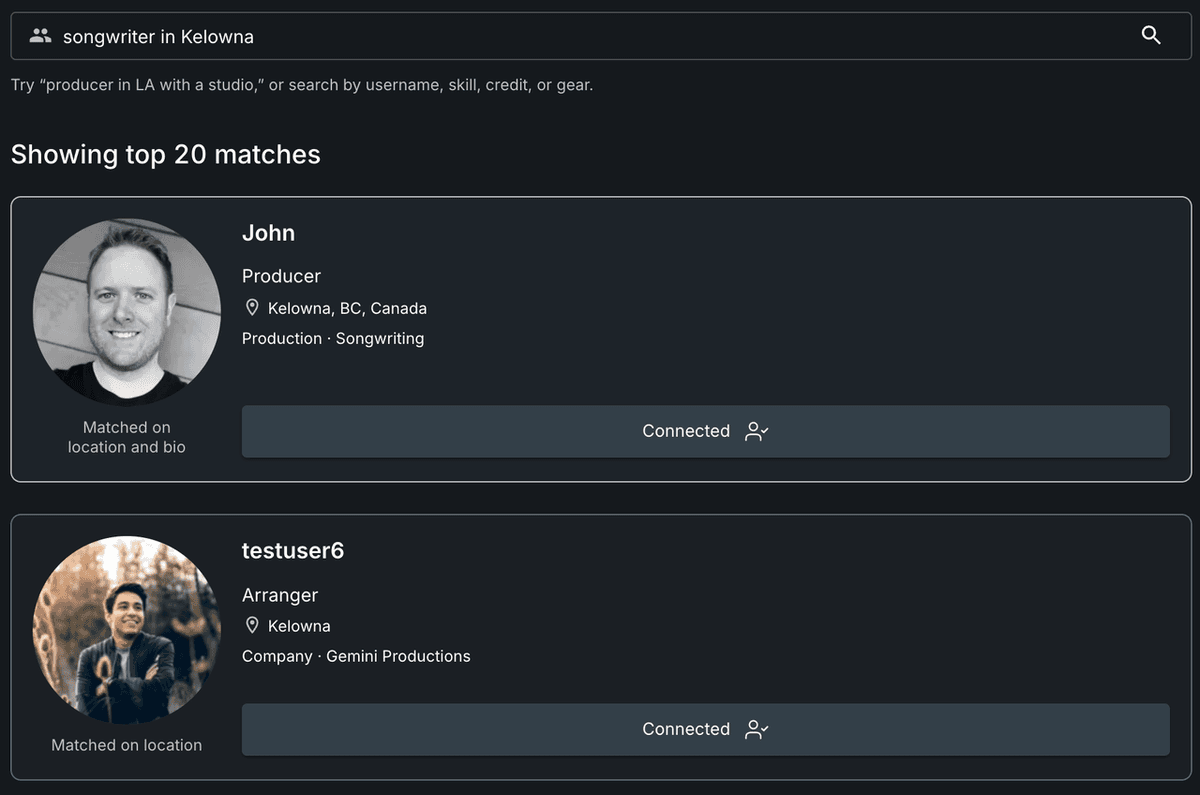
A search box for people and sound. Describe who you need or how something sounds, or drop in a track. How it works is on the Search page.
remote control, 2024
During a call, you can control someone else's computer, once they allow it. I designed and built the first version in August 2024. How it works is on the Remote control page.
what's in it
- Mixer
- The host and each guest in a call get a channel strip: a fader, a mute and pre/post meters. Talkback and the mix go to separate outputs, so talkback stays in your headphones while the mix plays on the speakers.
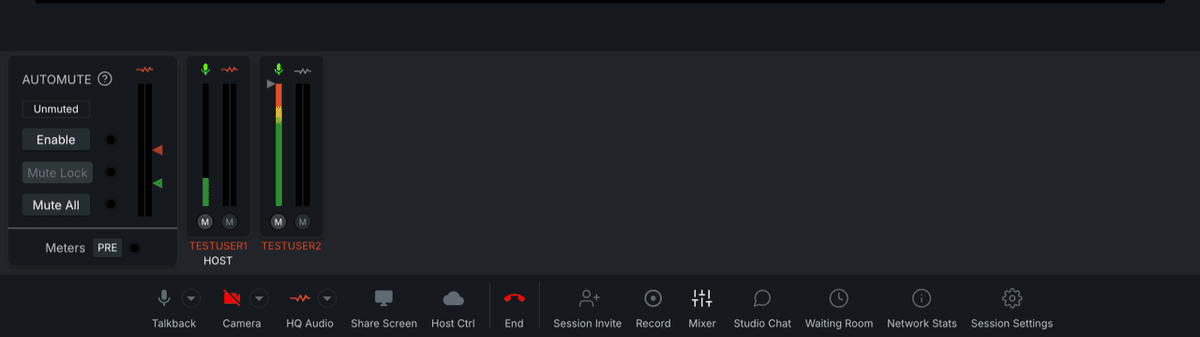
The mixer and toolbar in a two-person call. - Automute
- When the music gets loud, everyone's talkback mic mutes, so the music can't come back through it. That way the whole call hears the music at the highest quality, and people can still talk when they need to.
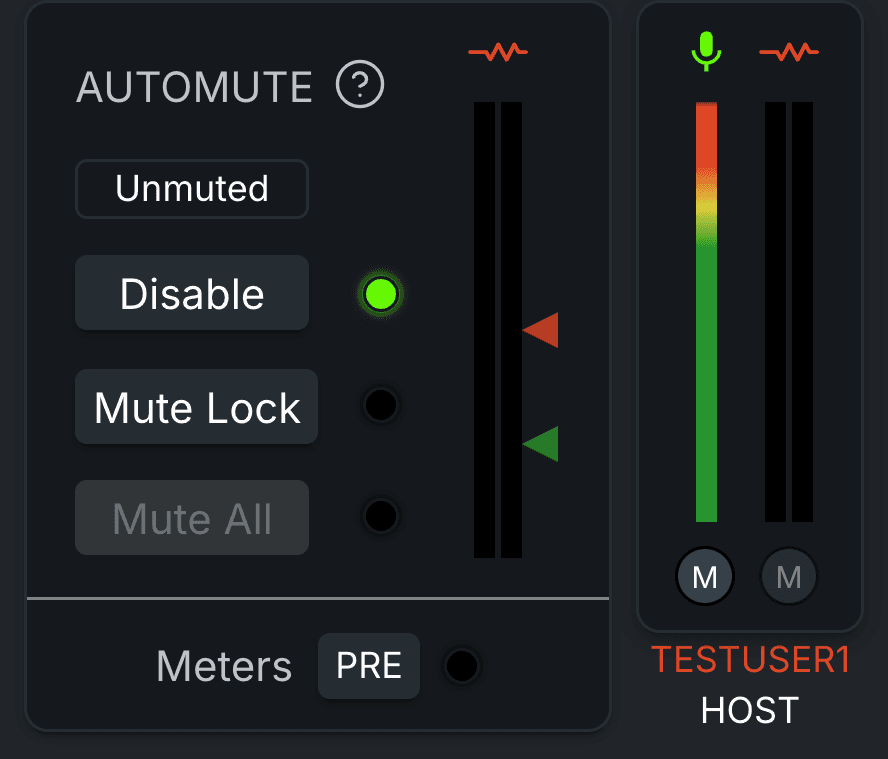
The Automute panel, turned on. The red and green markers sit on the HQ audio meter. - Calls
- Audio and video run on Daily. The biggest call had 216 people join, 169 of them at once.
- Operations
- An admin tab with health checks and emergency switches that work without a new release.
- Also
- Payments, the public API, and encrypted file transfer directly between computers.